Nine times out of ten, a garbage disposal tells you something's wrong before it fully quits. The hum with no grind. The puddle under the sink that wasn't there yesterday. The reset button you've pressed so many times you've developed a Pavlovian flinch every time you run the tap.
These aren't mysteries — they're symptoms. Most of them have a clear diagnosis, a clear fix, and a clear price. Here's what we'd tell any homeowner in Columbia, Lexington, or Irmo before we touch a single fitting.
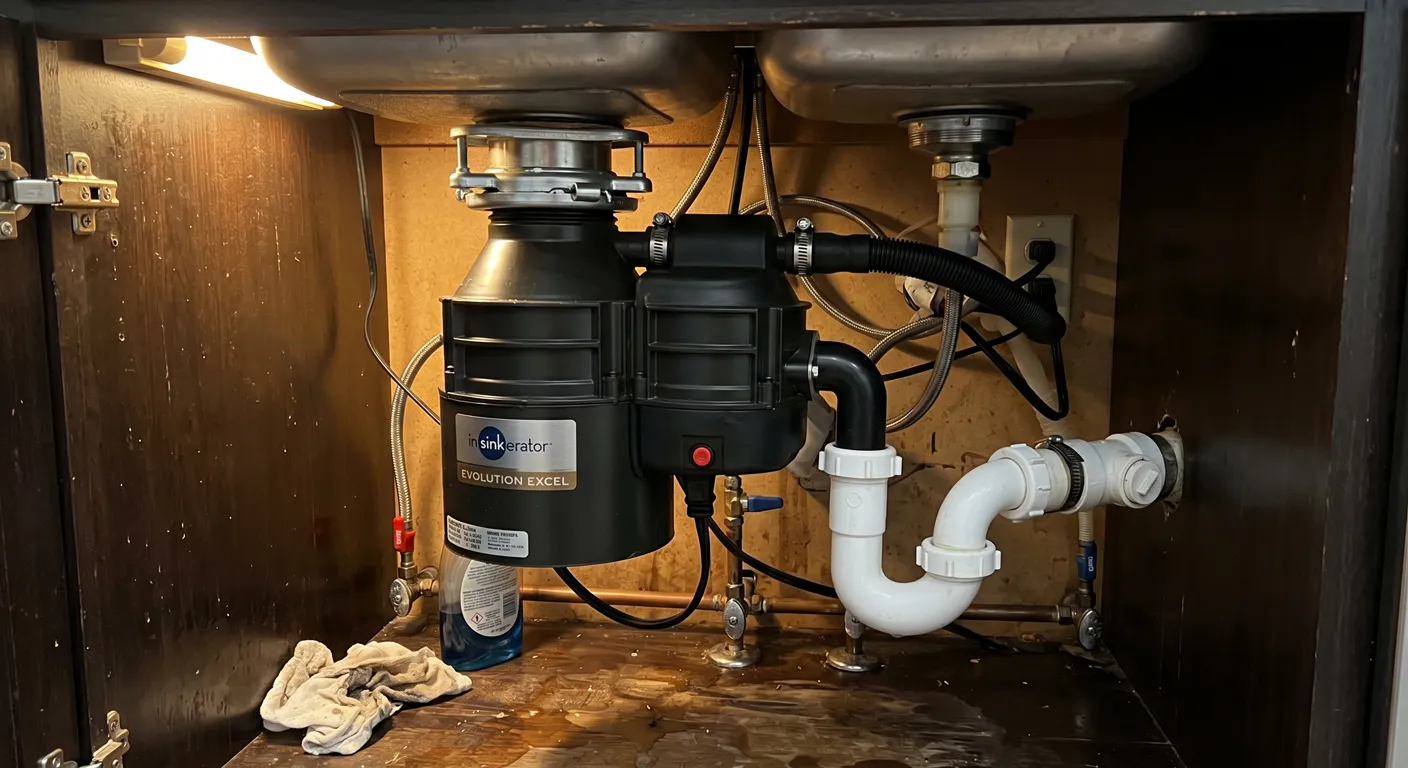
6 Signs Your Garbage Disposal Needs Attention
Not all disposal problems are equal. Some are a 10-minute fix. Some are a respectful goodbye. Here's how to tell which you're dealing with.
1. It's humming but not grinding
The motor's running but the impeller is stuck. A bone fragment, a peach pit, or a piece of silverware that took a wrong turn has lodged in the grinding chamber. Most units have a hex-key socket at the base — turning it manually frees the jam in about 30 seconds. If it keeps jamming after clearing, the impellers are worn. Repair territory, not replacement.
2. It trips the reset button constantly
One reset after an overload is normal. If you're pressing that little button every second or third use, the motor is drawing too much current and shutting itself off for safety. Under 5 years old — worth a repair. Over 10 — start pricing new units.
3. Leaking from the top or side
Leak at the sink flange (where the disposal mounts to the drain): the plumber's putty or mounting bolts have worked loose — a reseal job. Leak at the side where the dishwasher or drain hose connects: a worn gasket or a loose clamp. Both are cheap fixes. These are the good leaks.
4. Leaking from the bottom
This is the one nobody wants to hear about. A bottom leak means the internal seals have failed — water is escaping through the motor housing itself. Internal seals can't be replaced economically on a garbage disposal. If it's leaking from the bottom, the unit needs replacing. That's not us being dramatic. That's just how the math works out.
5. Slow draining that clears with hot water
Columbia kitchens — especially in older homes in Forest Acres, Shandon, and Eau Claire — deal with a lot of cooking-fat buildup in drain lines. Fat goes down warm, hits the cooler pipe a foot in, and sets like a candle. If slow draining clears with a kettle of boiling water and dish soap, it's the drain line, not the disposal. Try that first before booking anyone.
6. It won't turn on at all
Before you call: check the reset button at the base of the unit, then check your breaker panel. Disposals trip their own thermal overload when they overheat, and they can trip a shared kitchen circuit if they've seized. If neither fixes it, the switch, wiring, or motor has failed. Whether repair makes sense depends on age.
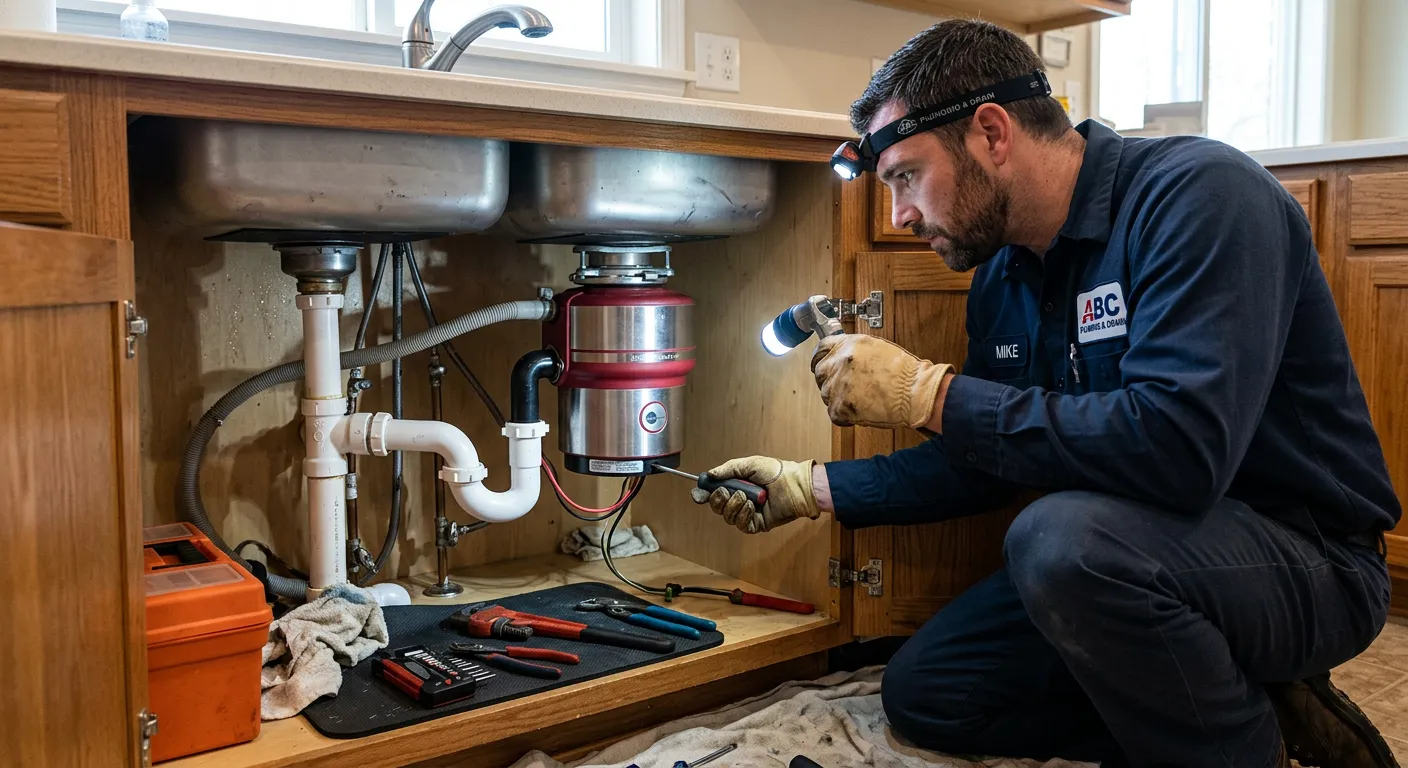
Repair vs. Replace: The Rule of Thumb
Most disposals last 10–15 years with reasonable use. The repair-vs-replace decision comes down to two things: age and fault type.
| Fault | Verdict | Why |
|---|---|---|
| Jammed impeller | Repair | Clearable onsite. Quick and cheap. |
| Leak at sink flange or hose fitting | Repair | Gasket or reseal. Straightforward fix. |
| Reset tripping (unit under 8 yrs) | Repair | Likely a jam or a faulty switch. Worth diagnosing. |
| Reset tripping (unit over 10 yrs) | Replace | Motor is failing. Repair cost approaches new unit. |
| Leak from bottom of housing | Replace | Internal seals gone. Not economically repairable. |
| Burnt-out motor | Replace | Motor replacement exceeds new unit cost. |
| Multiple call-outs in 12 months | Replace | Cumulative repair cost has passed a new install. |
The 50% rule
If the repair quote is more than half the cost of a new unit, replace it. A new disposal installed in Columbia runs $300–$600 all-in depending on brand and horsepower. If repair is over $250 and the unit is over 8 years old, the numbers don't usually favour fixing it.
We had a call recently from a homeowner in Lexington — disposal had stopped turning on entirely. She'd already paid another company $140 the previous year to clear a jam. Unit was 12 years old. The fault this time was a failing motor switch. We gave her the honest call: repair would run $160–$190, and based on the motor's condition, she'd likely be calling again inside 18 months. She went with a replacement at $390 all-in. New unit, 5-year motor warranty, problem solved once. Some jobs it's not about what you fix — it's about what you stop paying for.
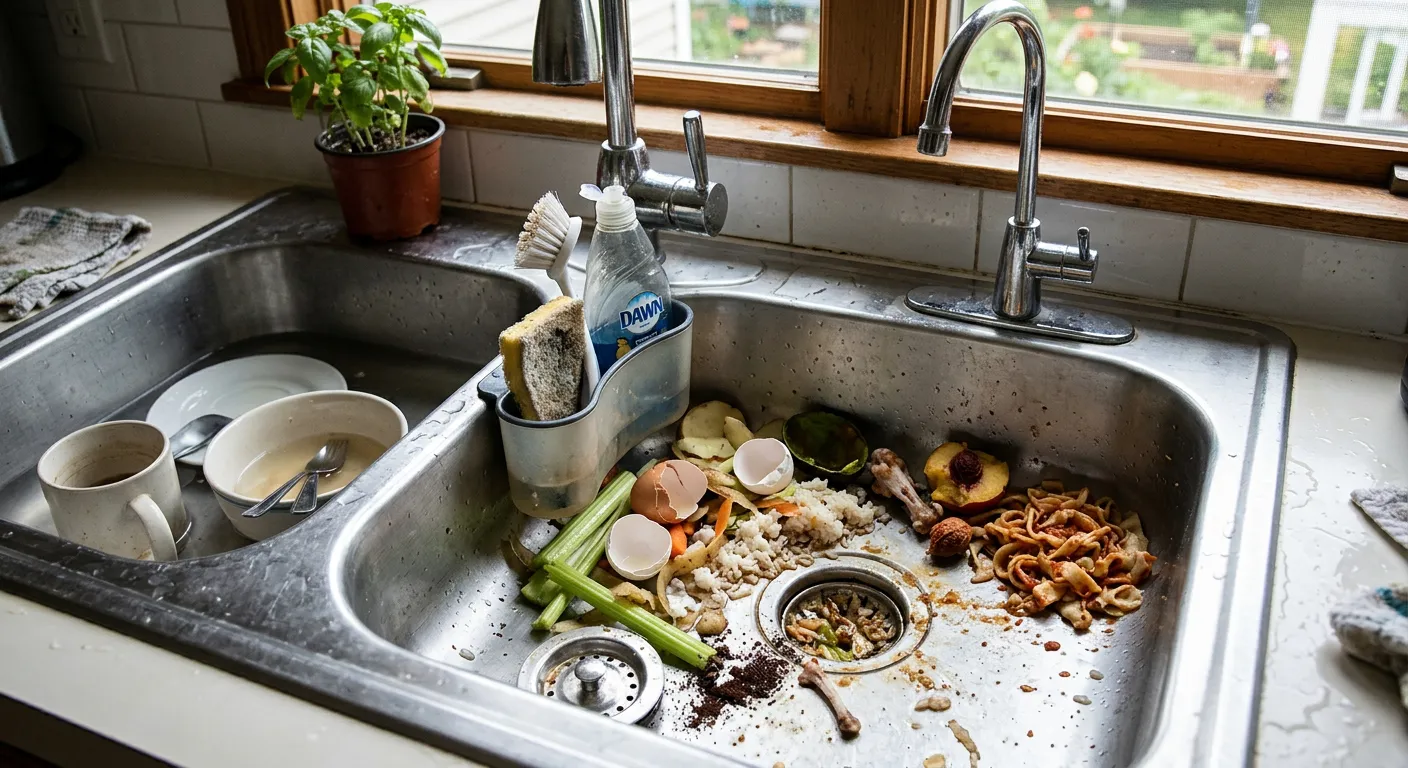
What Not to Put in a Garbage Disposal
Most disposal problems we see in Columbia are preventable. The unit isn't faulty — it just met something it wasn't designed for.
Cooking fats and grease
Goes down warm. Solidifies in the drain line about a foot in, where the pipe cools off. Narrows over weeks until something finally seals it. It's a drain problem that starts at the disposal. Wipe the pan, bin the grease — or pour it into a jar and toss it.
Fibrous vegetables
Celery, corn husks, artichoke leaves. The fibres wrap around the impellers instead of grinding — like threading a shoelace through a fan. Enough of that and the motor overheats and trips the reset.
Starchy foods — pasta, rice, potato peels
They absorb water and form a paste inside the drain line. That paste catches more food. Three months later a plumber is under your sink wondering about life choices. The bin exists for a reason.
Hard items — bones, pits, shells
Small soft chicken bones most modern disposals handle fine. Stone fruit pits, crab shells, pecan shells — those jam the impellers or chip them. The grinding sound that follows is not a good grinding sound.
Coffee grounds
They pass through the disposal fine and accumulate into a dense sludge at the P-trap. Impressive in its stubbornness. Use the trash or your garden compost — coffee grounds are actually great for soil.
Free fix before you call
Slow draining disposal? Pour a full kettle of boiling water down the drain, add a good squirt of dish soap, wait two minutes, then flush with hot tap water. Clears grease blockages roughly half the time. If it keeps coming back, the drain line needs a proper clean — but start here before spending anything.
Three Things to Try Before Calling Anyone
We mean this genuinely. If one of these fixes it, great — you just saved yourself a service call. If none of them work, then you've already ruled out the easy stuff and we can skip straight to the actual diagnosis.
1. Hit the reset button
Small red or black button on the bottom of the unit. Press it firmly until you feel it click. Run cold water, switch the disposal on, and test. The motor's thermal overload trips automatically when it overheats — a single reset fixes about a third of the "it's completely dead" calls we get. It takes 10 seconds and costs nothing. Try it first.
2. Unjam it with a hex key
Most disposals — InSinkErator especially — have a 1/4-inch hex socket at the center of the base. Insert an Allen wrench and work it back and forth to manually free the impeller. Clear whatever caused the jam using tongs (not your hand — ever), press the reset, run cold water, test. This resolves the majority of "humming but won't turn" calls.
3. Check the breaker panel
In most Columbia homes, the disposal shares a circuit with other kitchen appliances. If that circuit tripped, the disposal won't respond to anything. Check the panel, reset the breaker, try again. If it immediately trips again, there's a short or a seized motor — now it's time to call.
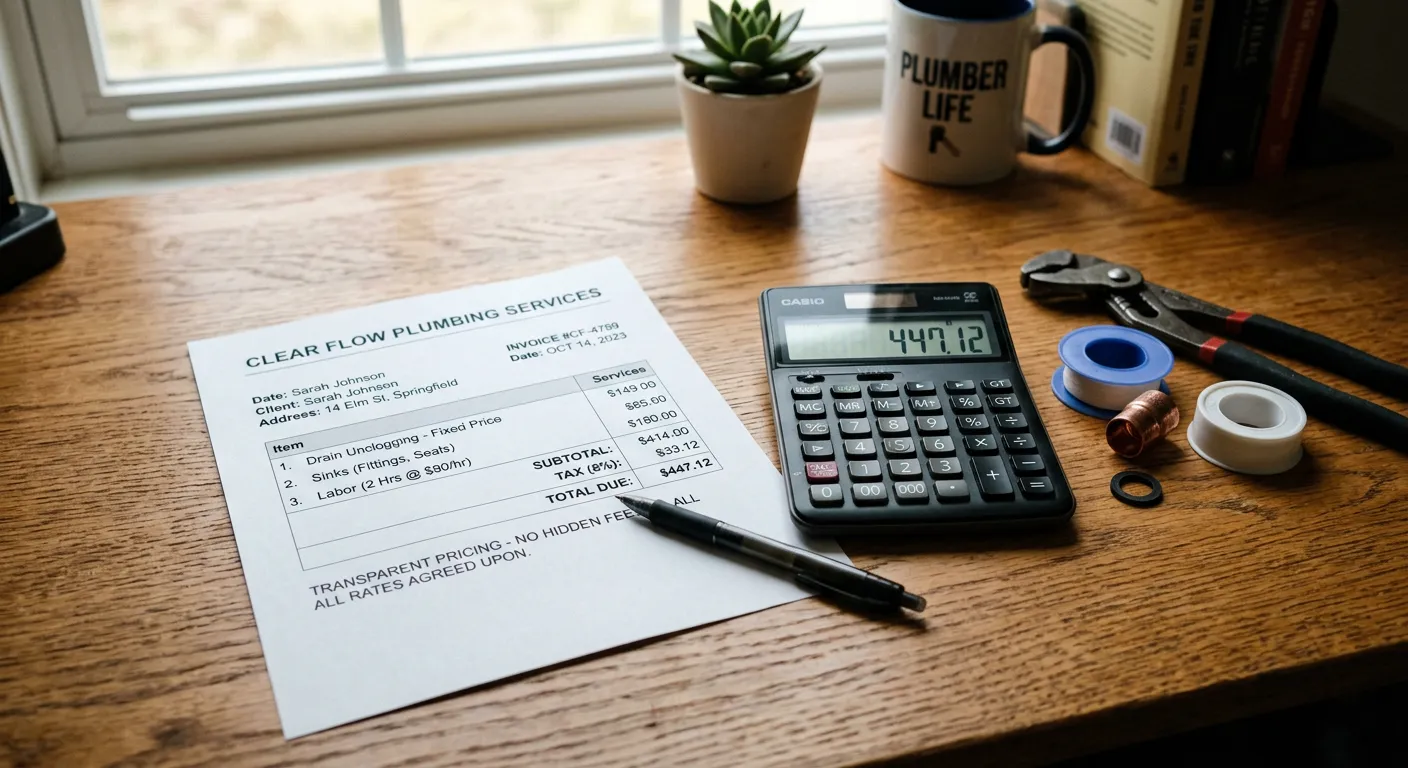
Garbage Disposal Repair Cost in Columbia, SC
Flat prices. Quoted before we start. What you're told is what you pay — no "we found a couple extra things while we were under there."
Columbia Plumber Pro — 2026 pricing
Prices include labor and parts. Same-day available for most jobs. Licensed and insured in South Carolina.
If another plumber quotes you "starting at $89" without specifying what's included, ask for the all-in total before they arrive. Starting-at pricing is how bills get to $400 for a job that should have been $150. Flat fees exist — and plumbers who use them aren't hard to find in Columbia.
When to Call a Plumber for Garbage Disposal Repair
You've tried the reset button, tried the hex key, the breaker is fine, and it's still not working. That's the signal.
Also call if: there's water pooling under the sink and you can't identify the source; the disposal is making a metal-on-metal sound you haven't heard before; it's tripped the breaker twice now; or you've had it repaired once in the past six months and the same fault is back.
What you don't need a plumber for: slow draining that clears with boiling water; a single reset trip after something fell in; an occasional odor that goes away after running ice cubes and half a lemon through it for 30 seconds. That last one is genuinely effective, by the way — clears the grinding chamber, sharpens the impellers slightly, and makes your sink smell like a lemonade stand for about an hour. Our technicians mention it every single time. Some customers have started doing it weekly. We're choosing to take that as a win.
A Few Things Specific to Columbia Homes
Columbia's housing stock is a mix of 1950s–1970s ranch homes, older bungalows in Shandon and Elmwood Park, and newer construction in Blythewood, Chapin, and out toward Lake Murray. The disposal issues we see vary by era.
Older homes — pre-1980, especially in Forest Acres, Eau Claire, and around Five Points — often have narrower kitchen drain lines (1.5-inch instead of 2-inch). A disposal puts significantly more organic load through a drain than a standard sink. If you're adding a disposal to an older kitchen for the first time, or if drain blockages keep coming back after repairs, the drain line diameter is worth checking before you invest in a new unit.
Columbia also sits in a hard-water zone. Mineral buildup inside the grinding chamber is more common here than in softer-water markets. If your disposal sounds like it's grinding gravel and there's no obvious obstruction, calcium buildup on the impellers is a likely culprit. A vinegar-and-baking-soda flush monthly keeps it manageable — or we can clean it out on the same visit as another repair.